Culture & Traditions

Slavic Dating Culture and Traditions Explained for American Men

The Cultural Knowledge That Sets Successful Daters Apart

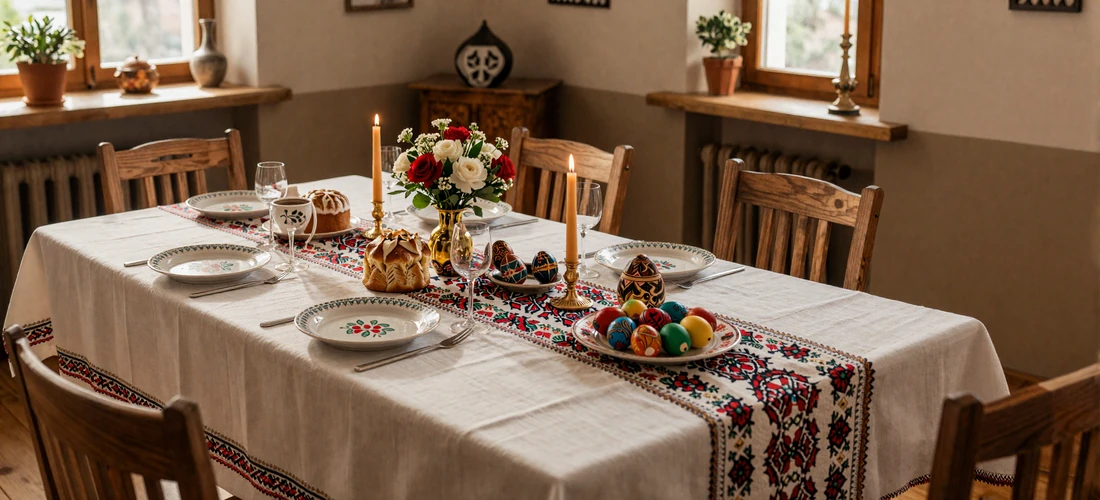
Traditional Slavic holiday dinner table with embroidered cloth, candles, bread, and colorful dishes set for a family celebration

Slavic dating culture is built on intentional courtship, deep family bonds, and traditions rooted in centuries of Orthodox and Catholic heritage - and understanding these customs is the single greatest advantage you can have as an American man pursuing a Slavic woman. Whether she is from Ukraine, Russia, Poland, Bulgaria, or Romania, her expectations around romance, gift-giving, family involvement, and holiday celebrations will differ significantly from mainstream American dating norms. Men who learn these differences build trust faster, avoid cultural missteps, and demonstrate the genuine respect that Slavic women value above almost everything else.

Key Takeaway: Slavic courtship is structured, family-centered, and symbolic. Flowers must come in odd numbers. Meeting her parents is a milestone that signals serious intent. Religious holidays - whether Orthodox or Catholic - are major relationship touchpoints. Learning these customs does not require perfection, only effort and sincerity.

Courtship Rituals and Gift-Giving Customs

Slavic nations - including Russia, Ukraine, Poland, Czech Republic, Slovakia, and Bulgaria - share foundational cultural traits despite geographic and linguistic differences: a strong sense of community, deep appreciation for art and history, and profound commitment to family values. These shared values shape a courtship culture that is far more structured and intentional than typical American dating.

How Courtship Works in Slavic Countries

In Slavic dating culture, courtship is not casual. A man is expected to take the initiative: plan dates, pay for dinners, and demonstrate consistent interest over weeks and months before a woman considers the relationship serious. Unlike American dating, where exclusivity often emerges organically after several dates, Slavic courtship involves deliberate verbal expressions of intent. When a man says "I am interested in you for a serious relationship," he is expected to mean it - and prove it through actions.

Physical intimacy progresses more slowly in most Slavic cultures compared to American norms. Holding hands, a kiss on the cheek, and walking arm-in-arm are early milestones. More intimate physical contact typically follows weeks or months of consistent courtship. Rushing physical boundaries is one of the most common mistakes American men make - and one of the fastest ways to lose a Slavic woman's respect.

Man presenting a bouquet of five red roses to a Slavic woman on a European cobblestone street during golden hour

The Flower Rule: Always Odd Numbers

Flowers are central to Slavic courtship - and the rules around them are non-negotiable. Always give an odd number of flowers (1, 3, 5, 7, or more). Even numbers are reserved exclusively for funerals. Giving a woman twelve roses on a first date - a perfectly normal gesture in America - would be deeply unsettling in Ukraine or Russia. Red roses signal romantic passion, while tulips and daisies work well for early dates when the relationship is still developing. Avoid yellow flowers in many Slavic cultures, as they can symbolize separation or jealousy.

Gift Expectations Beyond Flowers

Slavic women appreciate thoughtful gifts, but the emphasis is on meaning over monetary value. Perfume, quality chocolate, a book she mentioned, or a handwritten card demonstrate that you listen and care. Expensive jewelry early in the relationship can feel transactional - save that for significant milestones. When dating Bulgarian women, handcrafted gifts carry particular cultural weight because of Bulgaria's rich artisan traditions and deep South Slavic identity.

  • First date: a single rose or a small bouquet (3-5 stems) paired with a confident, warm greeting
  • Early weeks: chocolates, a book she mentioned, or tickets to a cultural event she would enjoy
  • After 1-2 months: perfume, quality jewelry, or a meaningful souvenir from your home city
  • Meeting her parents: a bottle of quality wine or cognac for her father, flowers and sweets for her mother
  • International Women's Day (March 8): this is mandatory - flowers, a gift, and a heartfelt message

Important Slavic Holidays Every Boyfriend Should Know

Holiday Date Significance What You Should Do
International Women's Day March 8 The most important romantic holiday in all Slavic countries - larger than Valentine's Day Give flowers, a gift, and a personal message. Missing this day is a serious offense
Orthodox Christmas January 7 Celebrated by Ukrainian, Russian, Bulgarian, and other Orthodox Christians; deeply spiritual family holiday Send a warm greeting, join her family dinner if invited, bring a thoughtful gift for the household
Catholic Christmas December 25 Major holiday for Polish, Czech, Slovakian, and Hungarian families with 12-dish Christmas Eve traditions Participate in family traditions respectfully, bring gifts, join midnight Mass if invited
Easter (Orthodox/Catholic) Varies (April-May) Most sacred religious holiday; dates differ between Orthodox and Catholic calendars by 1-5 weeks Learn her specific Easter traditions, help paint eggs, attend church if she invites you
Name Day (Imeniny) Varies by name Celebrated in most Slavic countries alongside or instead of birthdays; tied to patron saints Research her name day, surprise her with flowers and a small gift on that date
New Year's Eve December 31 The biggest secular celebration; families gather for elaborate dinners and fireworks at midnight Plan to celebrate together, exchange gifts, toast with champagne at midnight

Orthodox vs. Catholic Calendar Note: Understanding which religious calendar your partner follows is essential. Orthodox Christmas falls on January 7 (not December 25), and Orthodox Easter often differs by weeks from Western Easter. Many Romanian women follow the Orthodox calendar despite Romania's unique Latin-Slavic cultural blend, while Polish and Czech women follow the Catholic calendar. Knowing which holidays matter to her shows genuine cultural interest.

Celebrate Love - Meet Slavic Women Now

Anastasia, 28, Ukrainian woman from Kyiv seeking serious relationship Verified

Anastasia

28 • Kyiv, Ukraine

Start Chat
Ekaterina, 26, Russian woman from Saint Petersburg interested in dating Verified

Ekaterina

26 • Saint Petersburg, Russia

Start Chat
Magdalena, 30, Polish woman from Krakow looking for American partner Verified

Magdalena

30 • Kraków, Poland

Start Chat
Elena, 27, Romanian woman from Bucharest seeking meaningful connection Verified

Elena

27 • Bucharest, Romania

Start Chat
Tsvetana, 29, Bulgarian woman from Sofia open to international dating Verified

Tsvetana

29 • Sofia, Bulgaria

Start Chat
Tereza, 25, Czech woman from Prague interested in serious relationships Verified

Tereza

25 • Prague, Czech Republic

Start Chat
Zuzana, 31, Slovakian woman from Bratislava seeking life partner Verified

Zuzana

31 • Bratislava, Slovakia

Start Chat
Orsolya, 33, Hungarian woman from Budapest looking for committed relationship Verified

Orsolya

33 • Budapest, Hungary

Start Chat

Family Dinner Etiquette and Religious Traditions

Slavic culture is renowned for its elaborate folk traditions, beautiful costuming, and community-centered celebrations that have survived centuries of migration and conflict. When you are invited into these traditions - especially a family dinner - you are being offered something significant. Here is how to honor that invitation properly.

What to Expect at Her Family's Table

Family dinners in Slavic households are extended, multi-course events that can last two to four hours. Expect homemade dishes served generously - and expect to eat generously. Declining food or eating sparingly can offend the host, who views feeding guests as a demonstration of love and hospitality. Arrive with gifts: flowers for her mother (odd numbers), a bottle of quality wine or cognac for her father, and chocolates or pastries for the table.

  • Remove your shoes at the door - this is non-negotiable in nearly every Slavic household. Hosts often provide guest slippers.
  • Compliment the food specifically. Say which dish you enjoyed most. Asking for the recipe is the ultimate flattery.
  • Accept second servings. Politely declining the first offer is expected; her mother will insist. Accept on the second offer - refusing twice is rude.
  • Toast properly. When drinking, look people in the eye during toasts. Never toast with an empty glass. Common toasts include "Za zdorovye" (to health) in Russian or "Na zdorovya" in Ukrainian.
  • Help clean up. Offering to clear dishes shows respect, even if the offer is declined.
  • Stay longer than you think. Leaving immediately after eating signals that you came only for the food. Conversation over tea and dessert is the most important part of the evening.

Orthodox vs. Catholic Traditions in Dating

The religious divide between Orthodox Christianity and Roman Catholicism shapes Slavic dating culture in practical, everyday ways. Orthodox Slavic heritage - practiced primarily in Ukraine, Russia, Bulgaria, Serbia, and Romania - emphasizes different holiday calendars, fasting periods, and church rituals than the Catholic traditions followed in Poland, Czech Republic, Slovakia, Hungary, and Croatia.

Orthodox Christians observe Great Lent for 40 days before Easter with strict dietary fasting (no meat, dairy, or eggs). If your partner is devout, she may expect you to respect these fasting periods - not necessarily to participate, but to avoid planning steak dinner dates during Lent. Catholic Slavic women, particularly in Poland, may attend Sunday Mass regularly and expect a partner who respects - if not shares - that practice. Christian acculturation among Slavic peoples dates back to the mission of Saints Cyril and Methodius of Thessalonica, whose legacy still shapes cultural identity across the region.

  • Orthodox women: may cross themselves before meals, keep icons in the home, observe fasting periods, celebrate Christmas on January 7
  • Catholic women: may attend weekly Mass, celebrate saints' feast days, observe Advent traditions, have Christmas on December 25
  • Secular women: even non-practicing Slavic women often celebrate religious holidays as cultural traditions with family - respect for these traditions is expected regardless of personal faith

Slavic Superstitions to Know About

Slavic cultures carry a rich tapestry of superstitions that influence daily life and dating behavior. Some may seem unusual to American men, but taking them seriously - or at least not dismissing them - shows cultural sensitivity:

  • Do not shake hands or pass items across a doorway threshold. It is considered bad luck; step fully inside or outside first.
  • Never give an even number of flowers. Even numbers are for funerals only - this cannot be overstated.
  • Do not whistle indoors. It is believed to drive away money and good fortune from the household.
  • Sit for a moment before a journey. Before leaving her apartment for a trip or important event, everyone sits silently for a minute - a tradition called "prisest' na dorozhku" (sit before the road).
  • Avoid placing an empty bottle on the table. Place finished bottles on the floor. An empty bottle on the table supposedly brings financial misfortune.
  • Spilling salt is bad luck - but you can counteract it by throwing a pinch over your left shoulder.
  • If you return home for a forgotten item, look in the mirror before leaving again to reset your luck.

Pro Tip: You do not need to believe in these superstitions - but following them when you are with her or her family shows that you respect her culture. That respect translates directly into trust and emotional connection, which is the foundation every Slavic woman looks for in a long-term partner.

Summary - Cultural Fluency Is Your Greatest Dating Advantage

Slavic dating culture revolves around intentional courtship, meaningful gift-giving with symbolic rules, family-centered holiday celebrations, and religious traditions that shape daily life. Always give odd numbers of flowers. Learn whether she follows the Orthodox or Catholic calendar. Bring gifts when meeting her parents. Stay late at family dinners and compliment the food. Respect the superstitions even if you do not understand them. These are not arbitrary rules - they are the language of respect and seriousness in Slavic relationships. American men who invest the effort to learn this cultural language discover that Slavic women dating offers a depth of connection, family warmth, and romantic authenticity that mainstream American dating culture rarely provides. The traditions may be different, but the goal is the same: building a genuine, lasting partnership rooted in mutual respect.

Embrace the Culture - Start Dating Today

Connect with verified Slavic women who value tradition, family, and genuine partnership. Your cross-cultural love story starts here.

Create Your Free Profile